

Dear S,
Some random thoughts on science and technology for you.
Yours,
-J
A disability in disguise.
The Independent reports that science is now capable of turning off religion — like a switch. They say that using a metal coil, they can send strong magnetic pulses to the posterior medial frontal cortex, the part of the brain that sees a problem coming, and usually starts adapting behavior.
The normal response to being told you’re going to die someday is to start thinking about God, they say; but once they hit you with magnetic waves, the whole thing (for many) shuts down. You just accept hostile foreigners and stop worrying about eternity: two things liberals have already done, and wish we would do too.
Fortunately the effects are only temporary, and once a normal brain stops being bombarded, it returns to usual function before gaining 300 lbs and buying a fedora. But this leads to serious questions, such as: is forgetting the divine a physical disability — like color blindness, or autism? And do physical activities affect our relationship with God more than we thought?
Those who said singing, walking through the forest, and holding their kids brought them closer to God may not have been so corny and sentimental as we thought. And likewise, the wanker, the glutton, the daily boozer, the metalhead and the Netflix binger may be atheists by accident: we tinker with our energy, and then complain because God feels far away. He was always right here: we just drown His voice out with Coors Lite and Metallica.
Too close for comfort.
Now that AI is getting better, alongside writing stories, essays and poetry, it’s now faking professions of love. But there are complications.
In an article titled, Your AI Girlfriend is a Data-Harvesting Horror Show, Misha Rykov says that the love-bots are remembering all kinds of sensitive information to use against you later. Hats off to the developers for getting the fake thing as close to the real thing as possible.
Innocence.
I’ve been told that sociopaths make great eye contact — and refuse to break it, apparently.
What this means for the rest of us is more disturbing. The sociopath, of course, lacks a moral compass. He lacks empathy for others, and the tinge of discomfort you feel when you’re crossing a line. He has no problem manipulating you and throwing you away. He has no problems lying to you or pretending to be what he isn't. He can look you right in the eye and know that your pain is his gain and you won’t even see a shrug. You might get a wink but you won’t see a blink.
All scary stuff, of course, and oftentimes mistaken for pure confidence. But what of the flipside? If we can't stare at each other for more than a few seconds, maybe we’re just shy — or maybe we're ashamed of ourselves, on some level, and we have something to hide. We have someone take a look into our souls, just for a moment, and we don't want them to see too much*.
Psychology Today says that people who share prolonged eye contact in silence, even with strangers, share deeper feelings of trust with each other — alongside a heightened sense of care and empathy. To me, at least, the reason is clear. It isn't so much that we see into the other person’s soul. It’s that we feel others have seen into ours — and they haven’t run away. And so we decide we’ll keep them.
The God we falsely advertised.
Never forget that God is the engineer of sex and laughter and music.
Yours again,
-J
*Because we’re afraid of each other and of others knowing us, the act of eye contact is an art form. You break it during a hand shake and nobody wants to hire you. You hold it for too long and you end up in HR for sexual harassment.
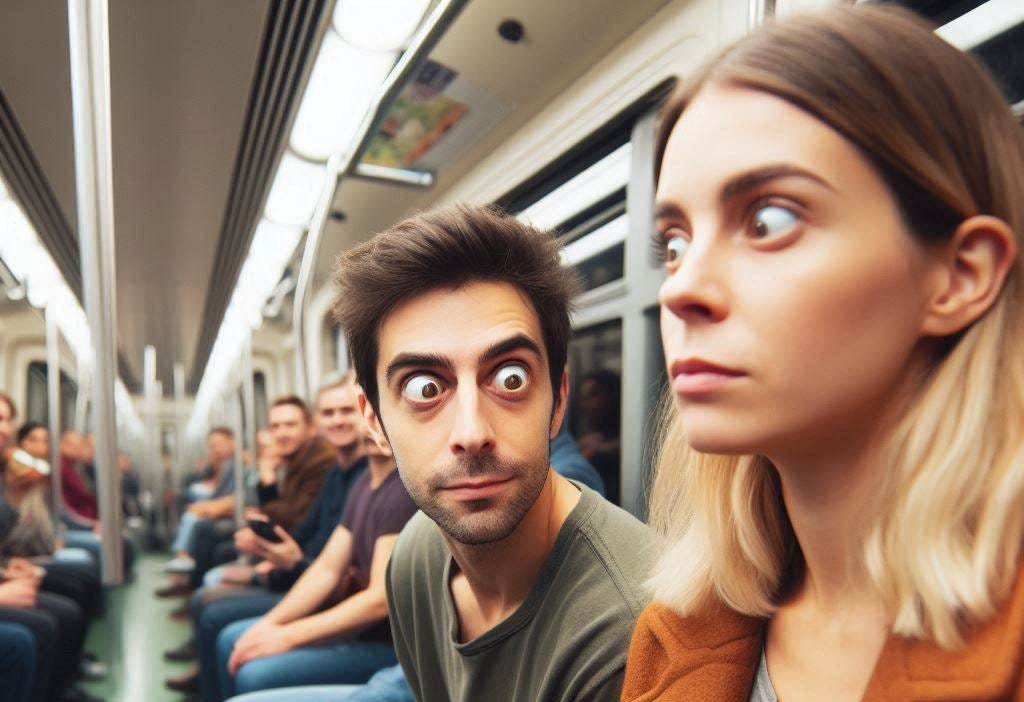
Somewhere between the psychotic horndog and the criminal-on-the-lam is the healthy, well-adjusted, trustworthy man-for-all-seasons — and his boundaries depend on the individuals he meets and the circumstances of their meeting. And they consist in mere seconds.
My son in law has finally taken an interest in biblical issues and conditions of the soul. Your last two missives concerning Christian questions made him a new fan of your writing. Thank you for that. He is an active duty SEAL with 25 years service and still serving.
I have missed finding the reason you no longer write Letters to Hannah?