

Dear T,
Chesterton writes, in the 1920 edition of the Illustrated London News,
Every man ought to have read enough good literature to know when he is reading bad literature, and to go on reading it. He ought to have had what is rightly called a liberal education, that he may know the largest purposes to which human language has been put. But the object of a liberal education is to make him liberal, not merely to make him fastidious. He should be able to recognise the ideas that have been clarified and codified by the utterances of great men, when they appear in a more fragmentary fashion in the utterances of ordinary men. But if he has lost all interest in the utterances of ordinary men, he had far better not have been educated at all. He might as well say that he had been so carefully taught to waltz that he was quite unable to walk; or that he had been so perfectly trained to sing that he no longer knew how to speak. The highest outcome of an interest in literature is a finer interest in life; and bad literature as well as good may throw a light on life, if we have learnt to know light from darkness. And there are a great many other reasons for reading books besides the fact that they happen to be good books. It is a good thing to suffer fools gladly; and an even better thing to enjoy fools uproariously.
What’s remarkable about this paragraph is that, unless you own the Ignatius Press edition — which is out of print, extremely expensive, and impossible to find — these words have been buried, and thus almost totally unread, for somewhere over 100 years.
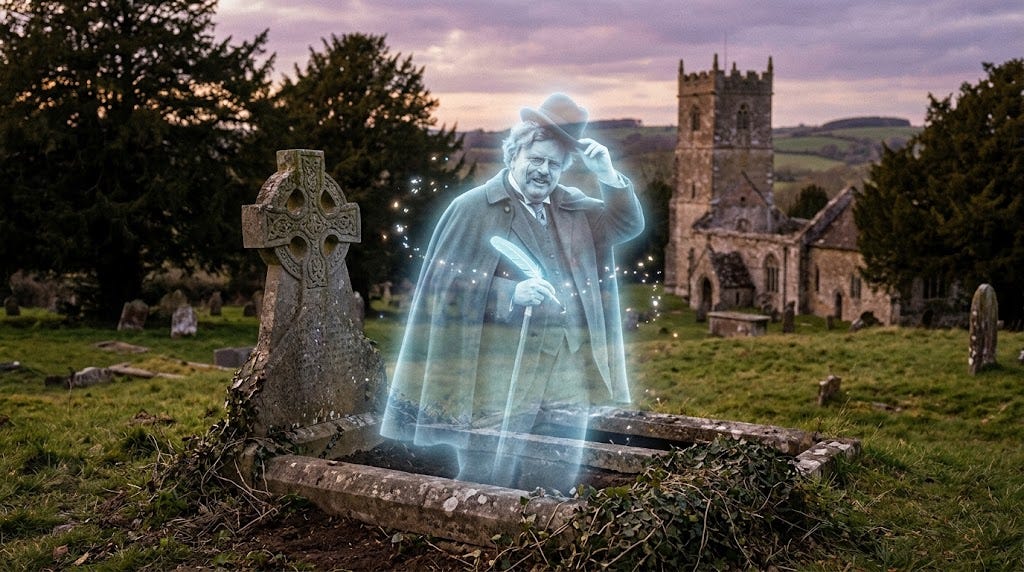
The question is, why? Chesterton, like George Orwell and CS Lewis, has such a dedicated fan club that burying such an essay seems almost impossible — either an extraordinary oversight, or part of a conspiracy. But a few weeks ago I found this was exactly the case. 998 authentic, original, and extremely interesting essays were sitting in public domain scans and waiting for someone to dig them out. So I started digging.
I put the word out to some of my friends, they threw some money at me for a ChatGPT upgrade, and I immediately went to work in excavation. To these friends — J, K, E, P, and R, I owe my sincere thanks. And if you like my writing, so do you. If I spent any more money on books this month, there was a pretty good chance my wife was going to shoot me.
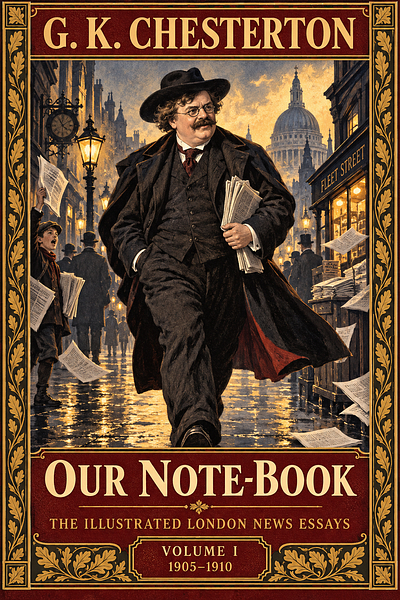
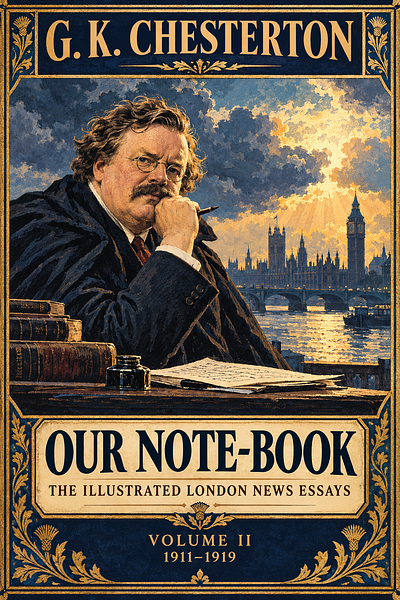
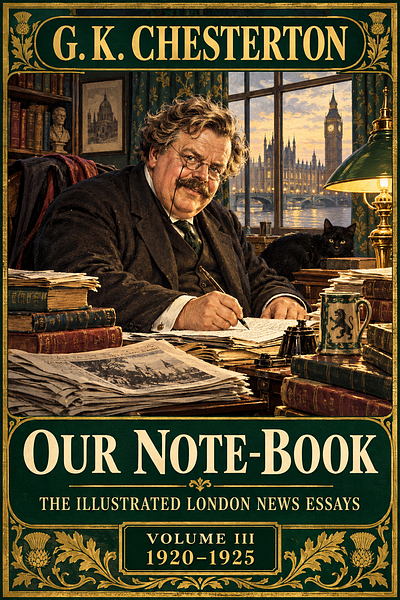
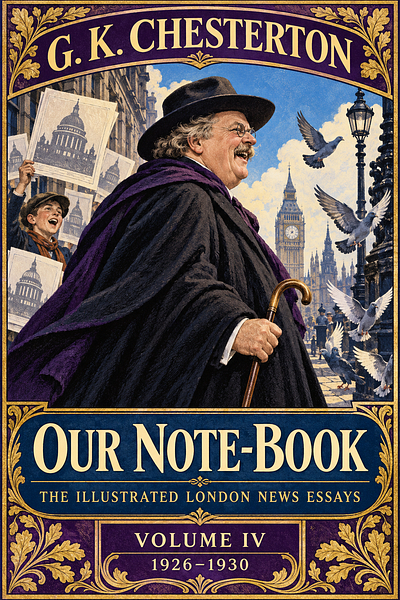
As such, I present to you GK Chesterton’s writings for the Illustrated London News. There will be punctuational errors here, few and far between, because the goal was to keep what I found — to preserve Chesterton’s writing as much as possible; and when you tell a robot to do that, sometimes it keeps a printing error. Oh well. You can get over this. The essays are free. Read them, love them, quote them, share them. I don’t just want these on my Kindle or a few of my friends’ Kindles. I want them on everyone’s Kindles. I want the whole world to enjoy one of the most original, prolific, sensible, and humane authors any country ever produced.
This being said, here are the essays. I have done my part for humanity. Now I beg of you, please do yours and share them with everyone you can.
Yours,
-J
September 14th, 2026
P.S. Because I figured out how to do stylish translations with ChatGPT, there are a LOT of great books coming your way, for free, over the next few years. To new readers, I strongly recommend hitting the subscribe button if you don’t want to miss out.
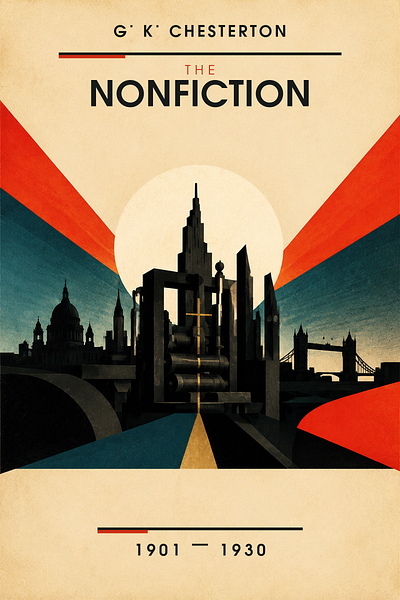
And if you haven’t got them already, here are Chesterton’s previously published works on Kindle. These are also free — and absolutely gigantic. Feel free to pass them around.
Quite an ambitious task. Thanks to you and your generous circle of colleagues.